

THE VILLAGE OF ETERNAL GRATITUDE
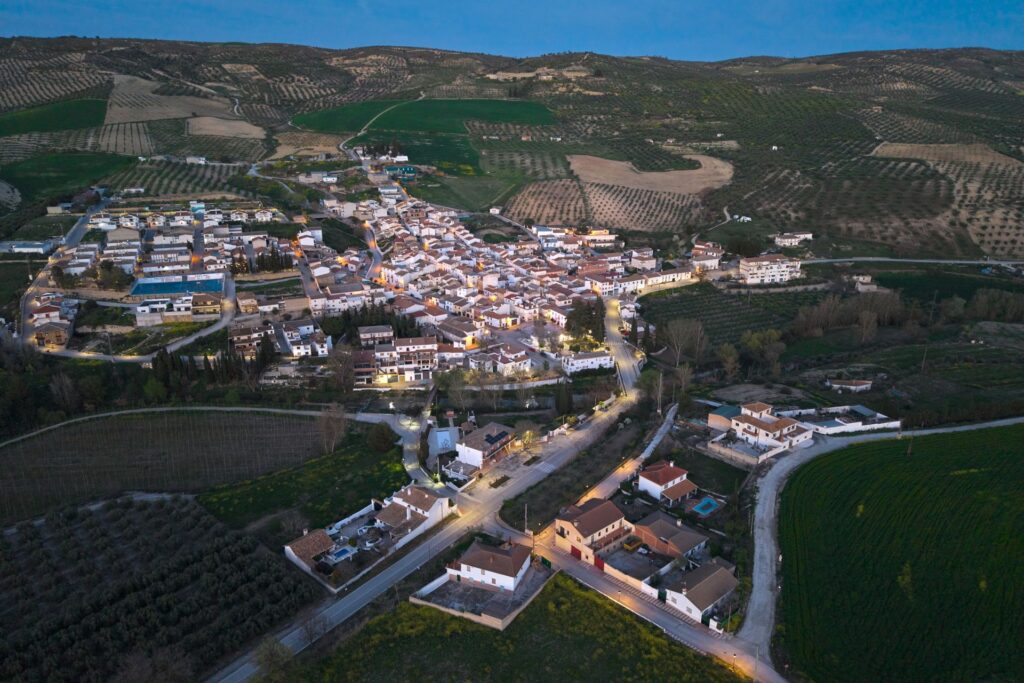
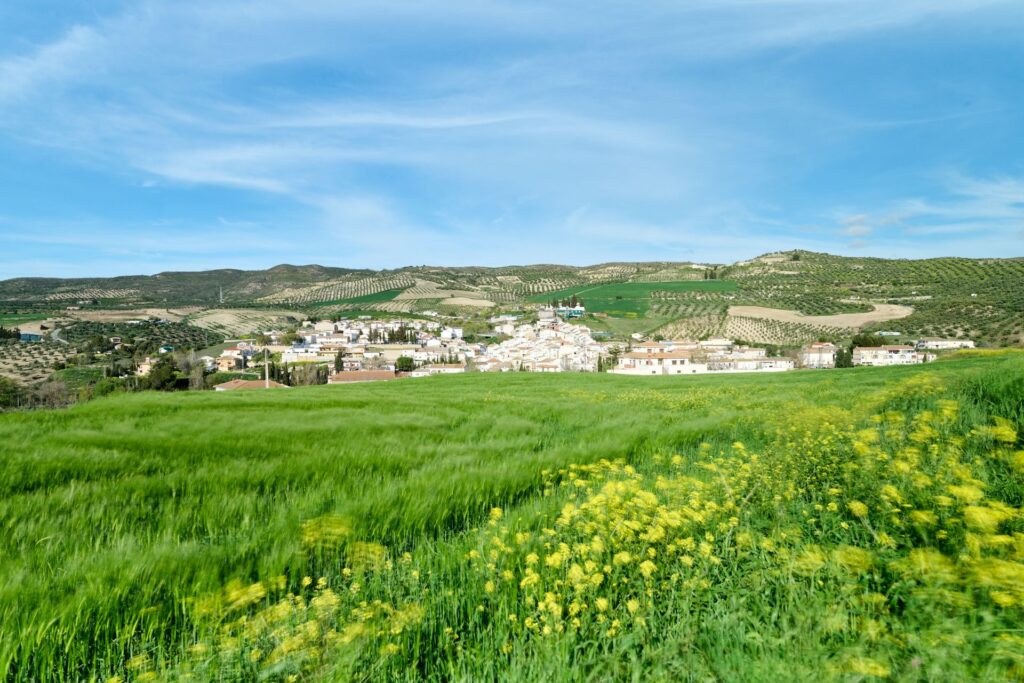
Santa Cruz del Comercio is a small municipality of just over 500 inhabitants that treasures a unique story of rebirth in Andalusia. Located in the north-central part of the Alhama region, this territory turned tragedy into opportunity and solidarity into identity. In fact, the uniqueness of Santa Cruz begins with its very name. The town was called ‘Santa Cruz de Alhama’ until 1884, when it changed its surname to ‘del Comercio’ in gratitude to the guild of Madrid merchants who financed part of its reconstruction after the tragic earthquake. The town preserves in its urban layout the memory of that solidarity, with street names like Prensa de Madrid or in honor of Carlos Prast, president of the Chamber of Commerce of Madrid.
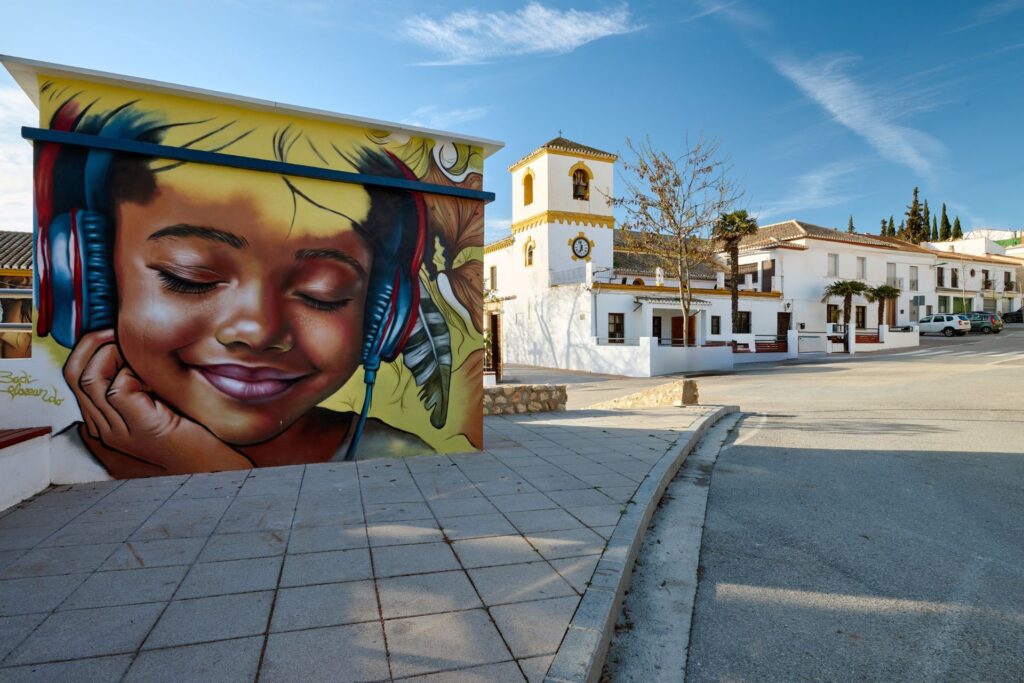
The historical heritage is highlighted by the Torre de Buenavista, the ruins of a medieval watchtower with a hexagonal plan built in the last Muslim period for the defense of the territory of the Nasrid Kingdom of Granada, and the Parish Church of Our Father Jesus Nazarene.
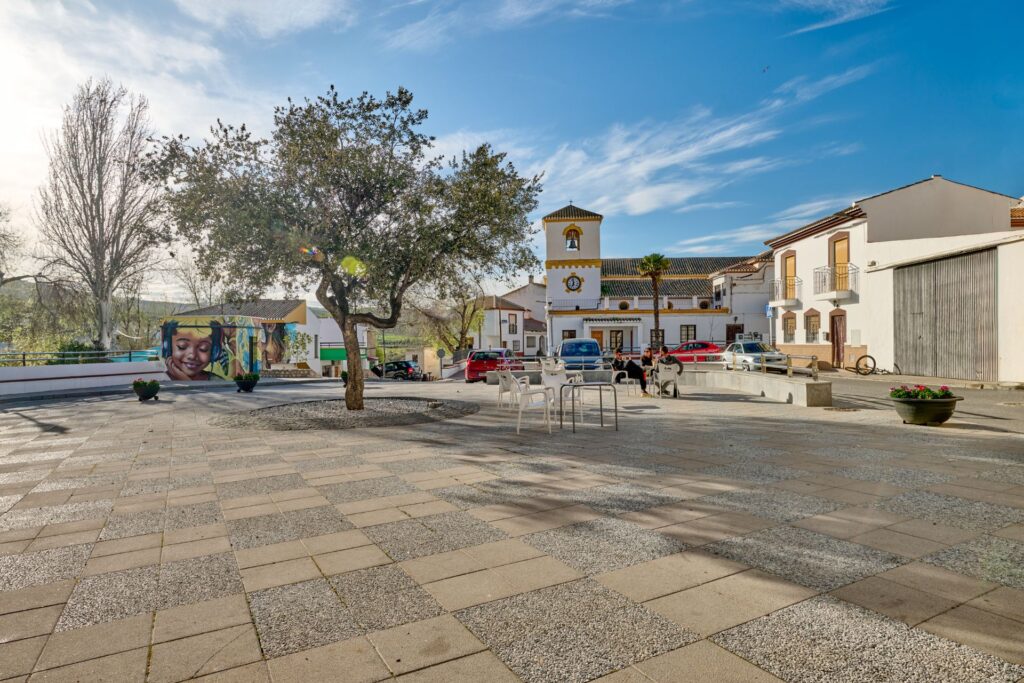
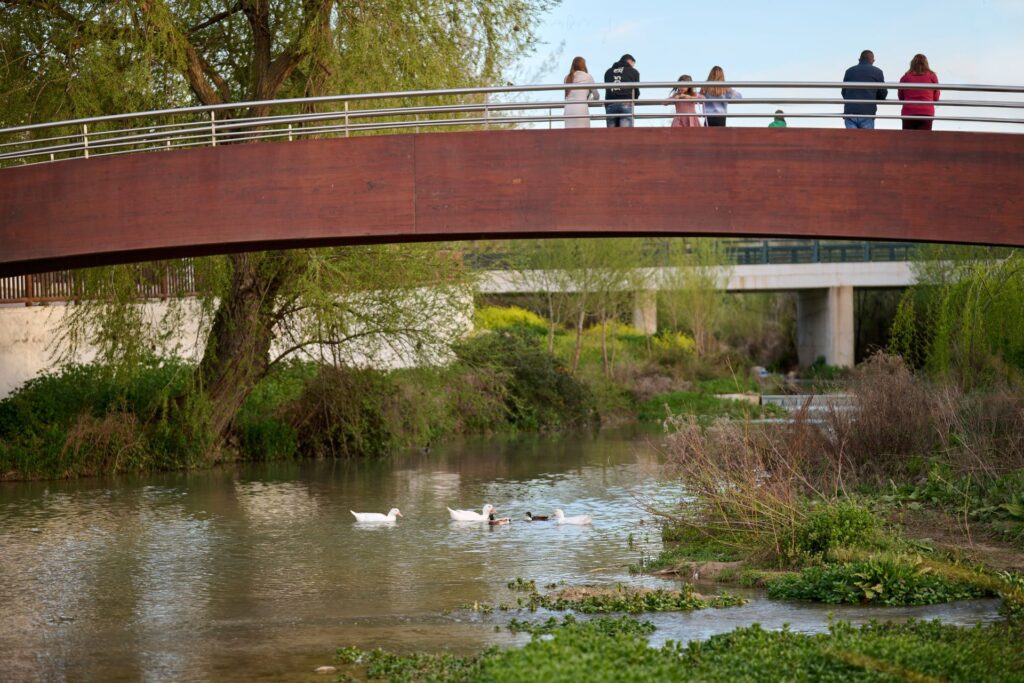
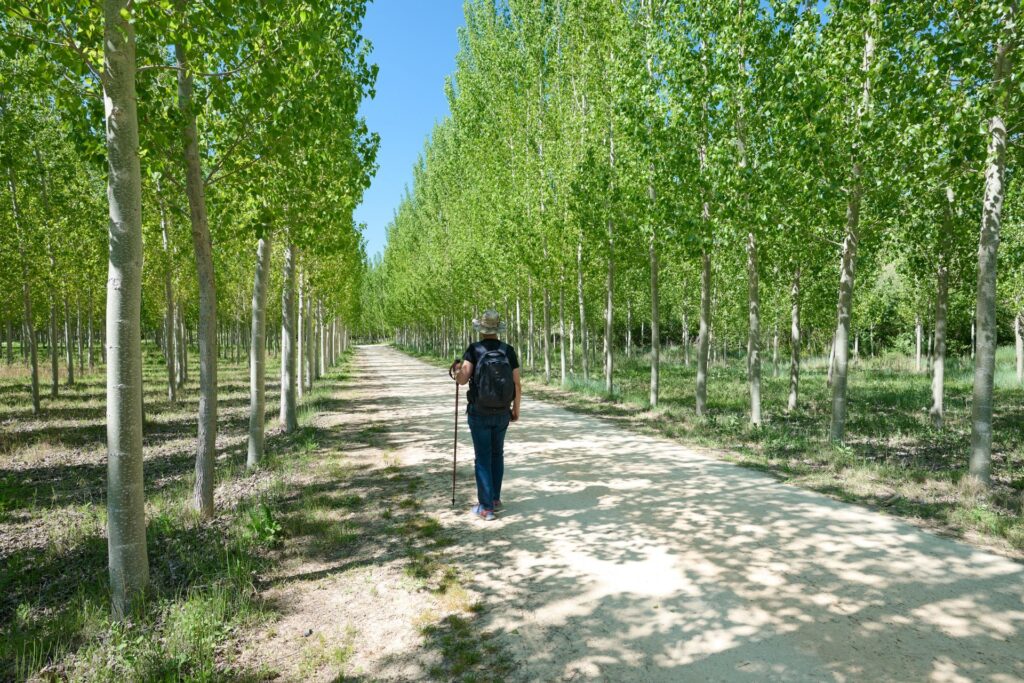
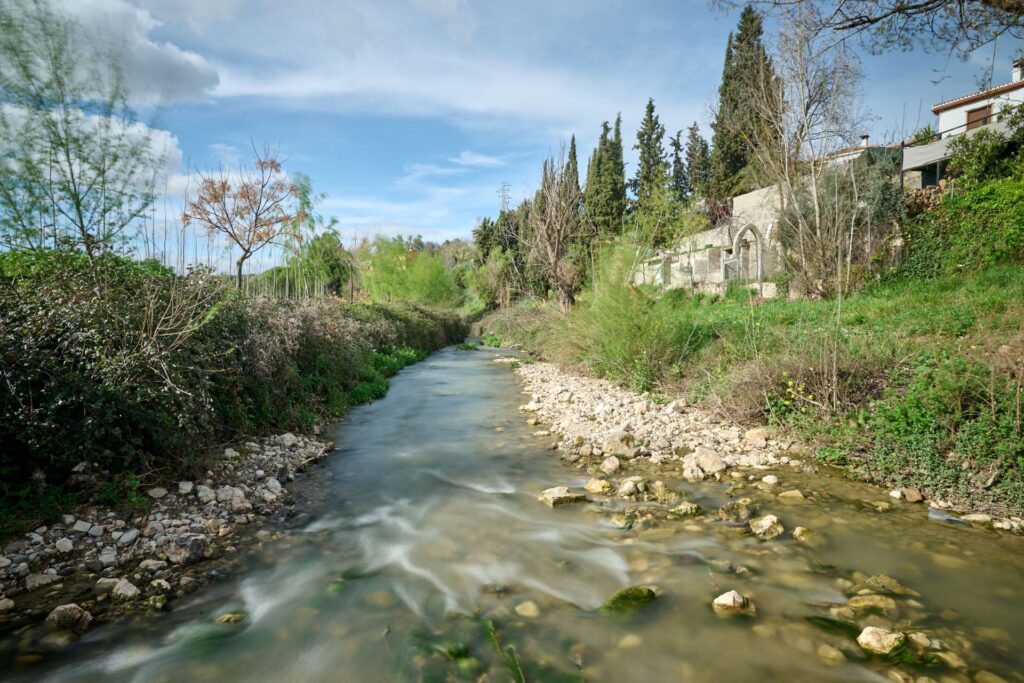
The municipality comprises two population centers: Santa Cruz and Valenzuela, also known as Seco de Lucena. Between them, the Alhama River forms a green corridor with traditional orchards and old mills. The natural landscapes of Peña Gorda, Los Llanos, and the barranco de Matajacas, along with the strip that covers the riverbed, offer numerous possibilities for active tourism. These areas are popular for hiking, and at Cortijo del Aire there is a camping area equipped for overnight stays surrounded by nature. The nearby Los Bermejales Reservoir also adds value to the natural setting, and the municipality’s strategic location facilitates access to both Granada and the mountain ranges of Málaga.
Traditions keep the collective memory alive. In May, they celebrate the festivities in honor of Jesus of Nazareth, decorating the entire town with the typical Crosses, also commemorating the month in which the rebuilding began after the earthquake. The local gastronomy is based on the traditional slaughter of the pig. Marinated ribs, loins, and cold cuts preserved in oil are prepared, while the cuisine is nourished by stews, pots, and migas.