

Montefrío

Imagen de una autocaravana en mitad del bosque

AMONG DOLMENS AND VIEWPOINTS
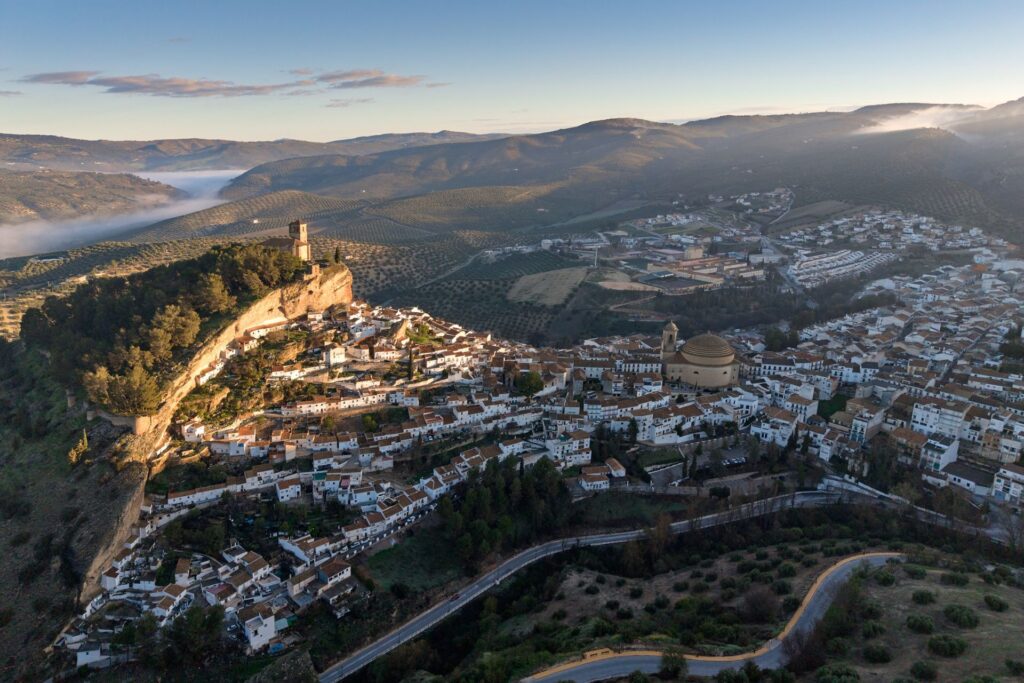
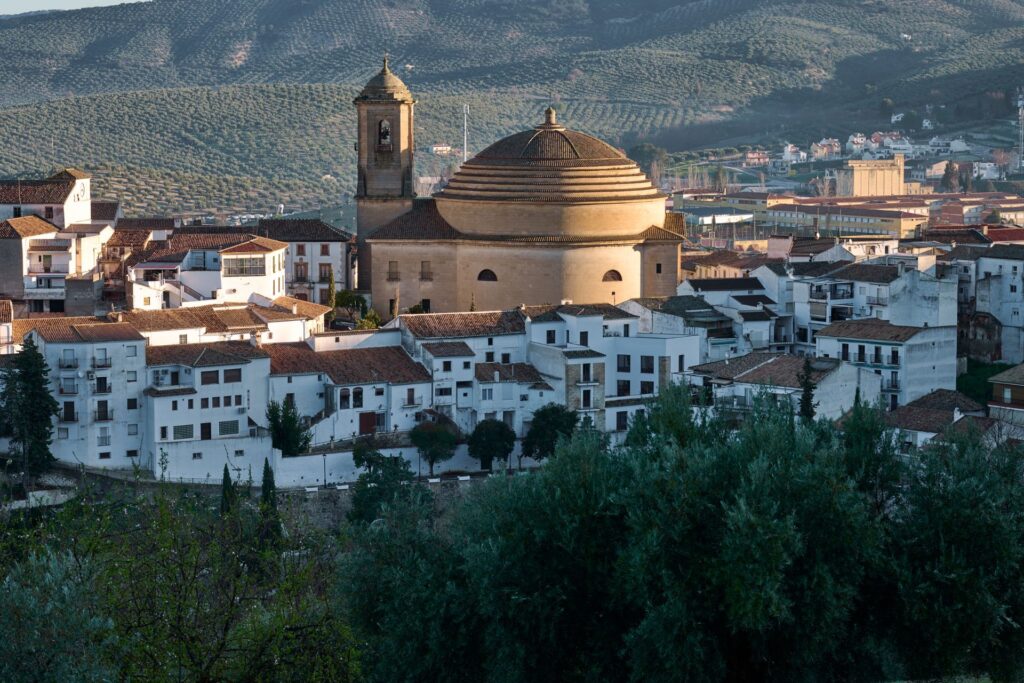
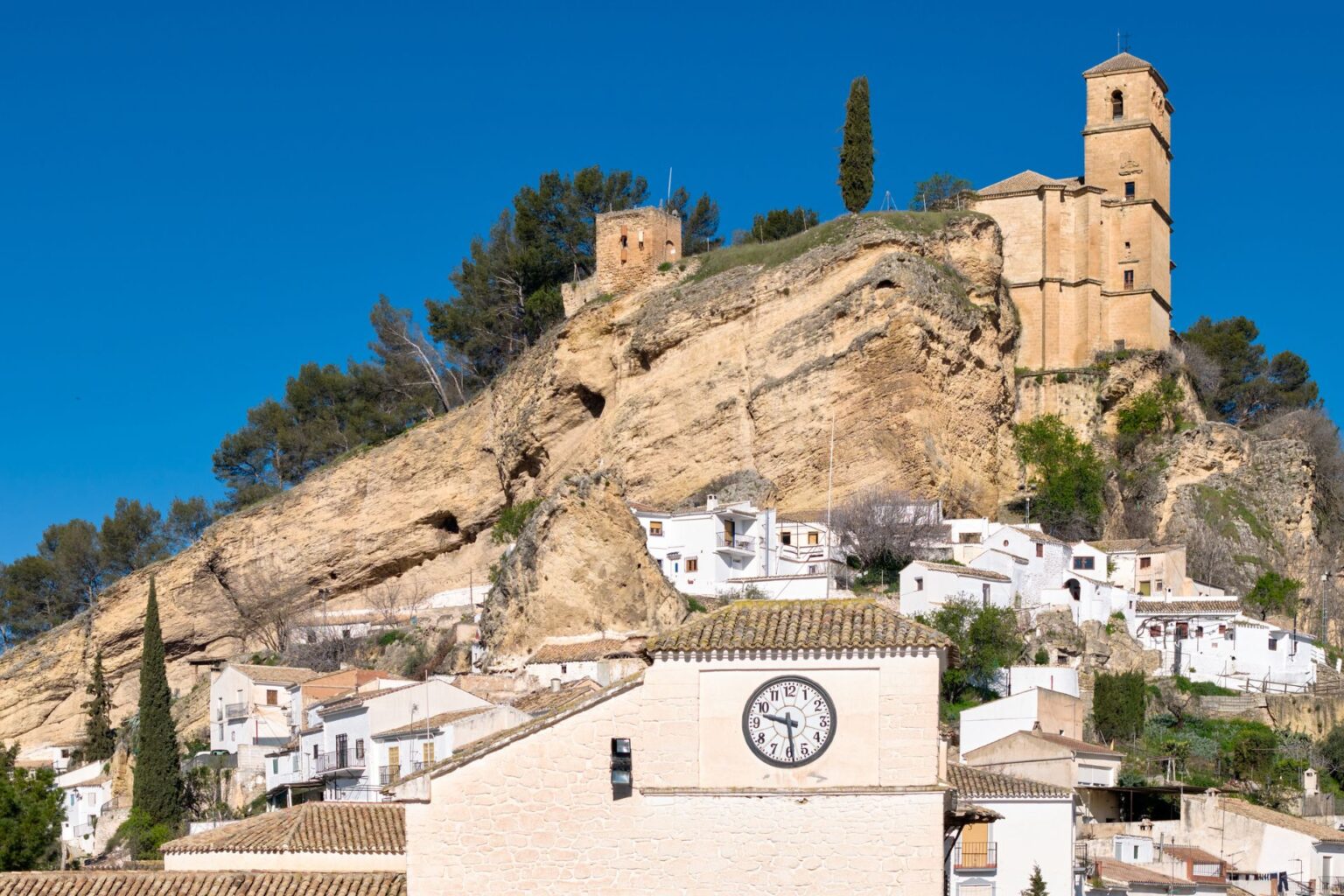
When in 2015 National Geographic magazine chose Montefrío as one of the ten villages with the best views in the world, it only confirmed what 19th-century romantic travelers already knew and what the Japanese discovered in the eighties, naming it ‘the beautiful unknown.’ Here, where the white houses climb impossibly up a rocky crag crowned by the Arab fortress and the Church of La Villa, each viewpoint tells a different story of the same architectural miracle.
Mirador de Las Peñas
The town was the westernmost stronghold of the Nasrid Kingdom, designed by the same architect who built the Alcazaba of the Alhambra, and its strategic position controlled the passage to Granada from three Christian kingdoms. When it fell in 1486 to the Catholic Monarchs, they ordered the construction, over the old mosque, of the Church of La Villa, the work of Diego de Siloé in Gothic-Renaissance style. Today it houses the Interpretation Center of the Last Frontier of Al-Andalus, where the epic defense of a world on the verge of disappearing is told.
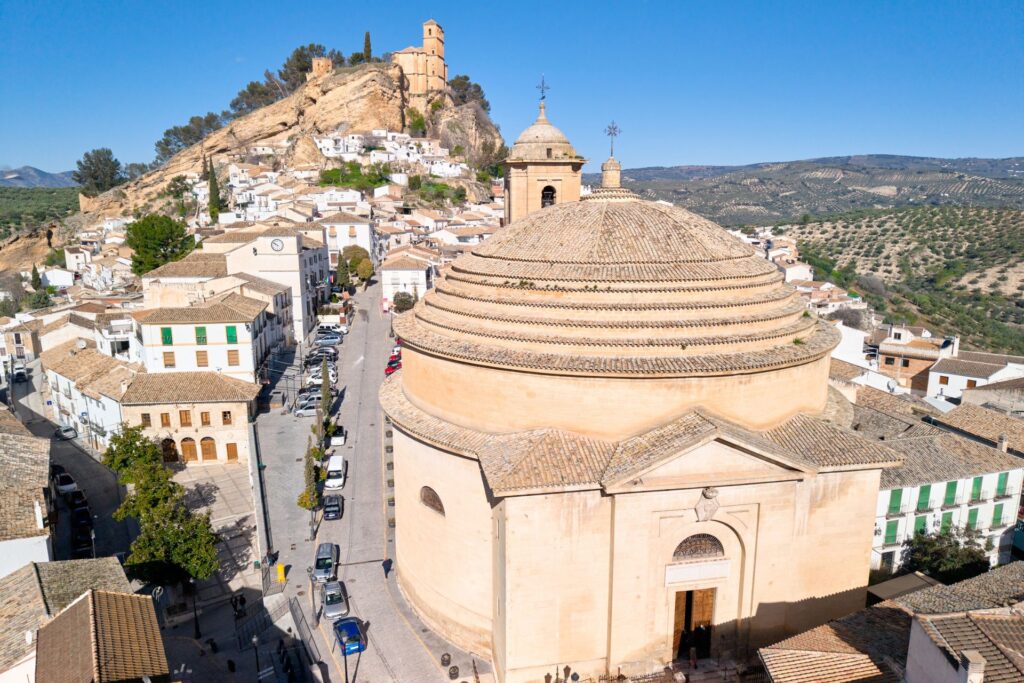
But if there is one building that both perplexes and amazes in equal measure, it is the Church of the Incarnation, known as ‘La Redonda.’ This replica of the Pantheon in Rome, with its perfect circular plan and its 30-meter-diameter dome, rises unexpectedly in the very heart of Andalusia. Built between 1786 and 1802 as the crowning work of the Spanish Enlightenment, its acoustics are so perfect that a whisper at one end can be heard at the other. Curiously, since a lightning bolt struck in 1776 injuring only a dog that lost its tail but survived—considered a miracle—dogs have been welcome in the churches of Montefrío.

Under the protection of the Sierra de Parapanda, whose Pico del Morrón rises to 1,608 meters with views stretching from Sierra Nevada to the Subbética mountains of Córdoba, nature has also been generous with Montefrío. On the slopes of the sierra, centuries-old gall oaks and holm oaks guard the path of the Arroyo de los Molinos, dotted with 15th-century flour mills. The landscape, dominated by olive groves with specimens over 500 years old, transforms each spring when the almond trees paint the hillsides white and pink, creating a natural spectacle that rivals the beauty of the stone monuments.


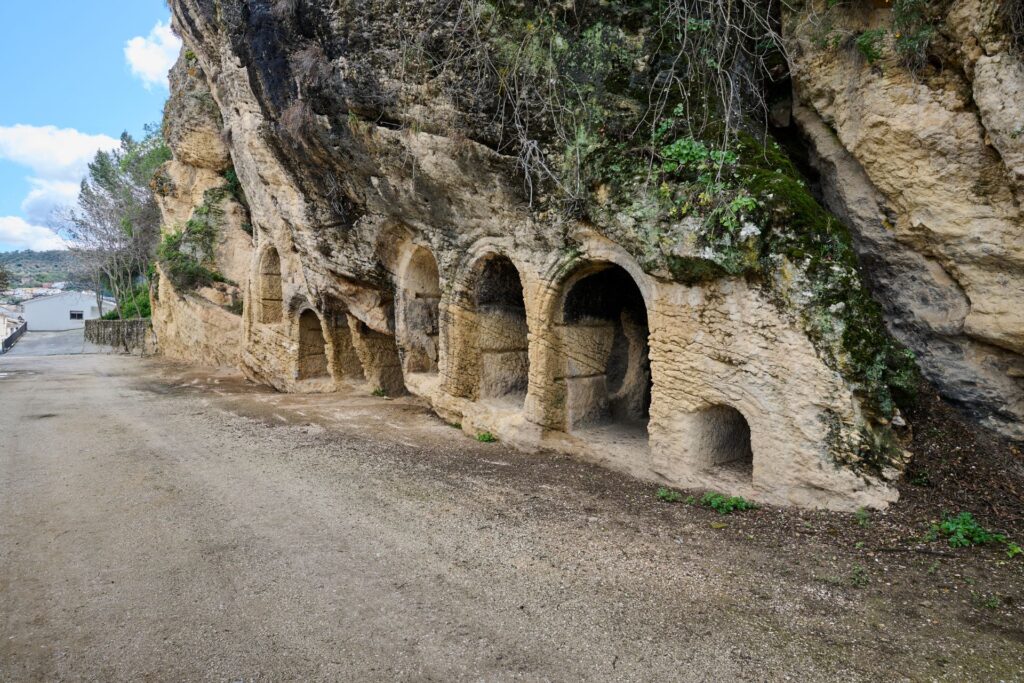
Just four kilometers from the town, the Peñas de los Gitanos preserve one of the most important archaeological sites in Andalusia. With more than one hundred Neolithic dolmens, the Settlement of Los Castillejos inhabited since 5300 B.C., and a Visigoth necropolis, this karst landscape demonstrates that Montefrío has been a chosen place for humans for over seven thousand years.
Montefrío’s gastronomy blends Arab heritage with Andalusian country cooking. Sesos al mojeteo, Remojón de San Marcos, kid with garlic, and wild green omelets are dishes that have survived conquests and reconquests. But it is the artisanal cheese of Montefrío, awarded in the most prestigious international competitions, that best represents the character of this land: traditional in its preparation, exceptional in its result. The Poniente de Granada PDO also protects its olive oils, whose labels proudly bear the unmistakable silhouette of the town.