

WHERE HISTORY IS SHARED AND SAVORED
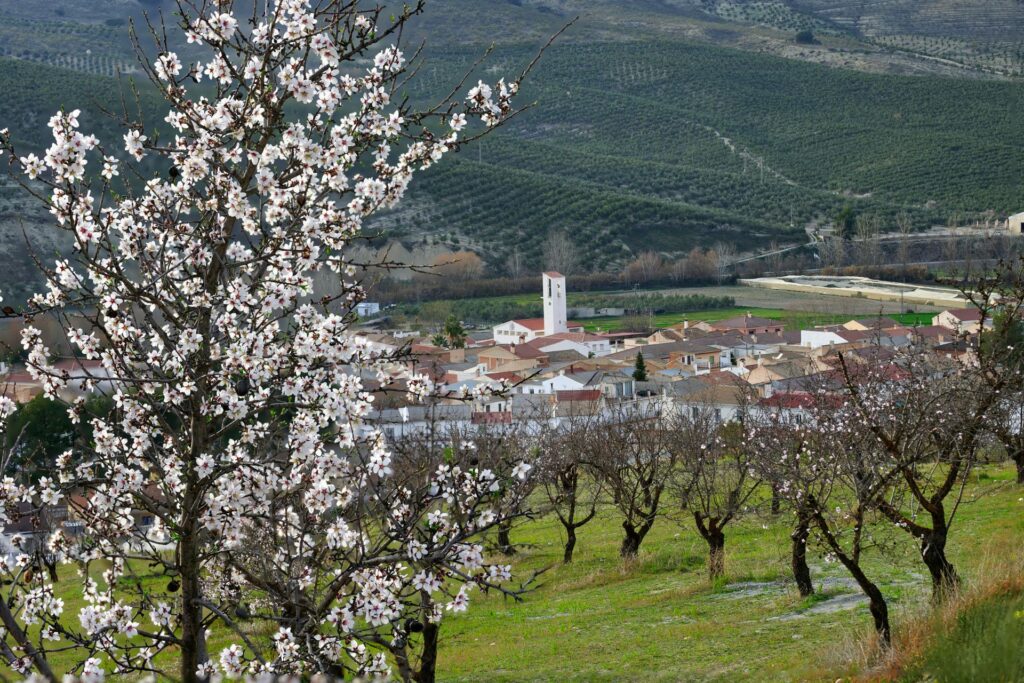
The history of Cacín is also written in water and stone. Its name comes from the family name of Abul Casim, on the old route of farmhouses between Granada and Alhama de Granada, although its foundation as a town dates from the 18th century. Bathed by the waters of the Cacín River, which in its descent from the Pantano de los Bermejales forms one of the most interesting river gorges of the Penibética mountain range, this small municipality of just over 500 inhabitants is located on a plain of straight streets that bears witness to the multiple reconstructions after historical catastrophes.
Los Tajos de Cacín custody one of the most important archaeological treasures of Andalusia. In the Cave of Cacín, remains of the Neolithic period appeared, among them the famous Vaso de Cacín which is on display in the Archaeological Museum of Madrid. It is an ovoid vase with three handles and printed cardial decoration, considered the southernmost find of this type of pottery on the peninsula. This unique piece connects Cacín with the first Mediterranean settlers more than 6,000 years ago, turning these cliffs into a natural laboratory where you can read prehistory.
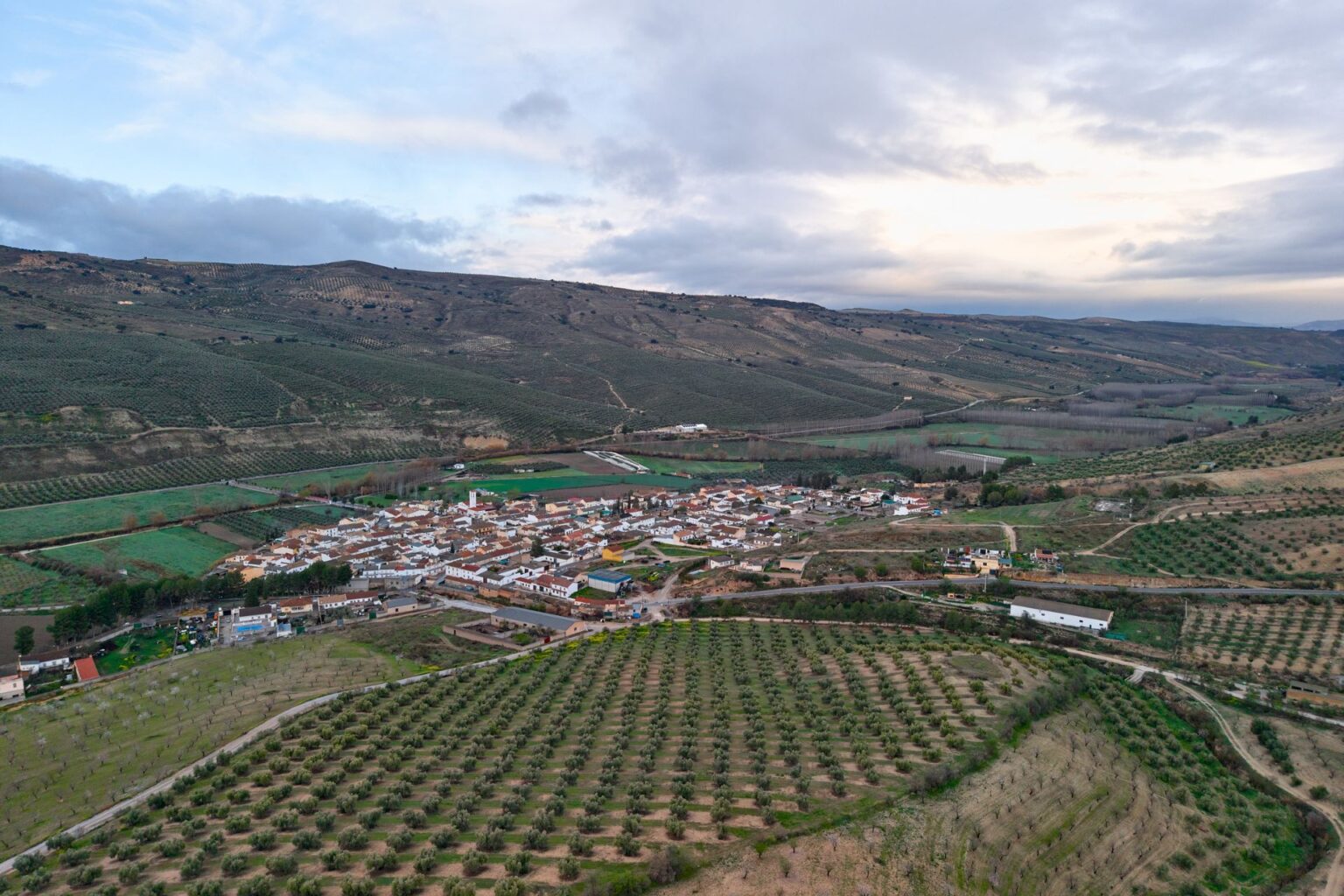
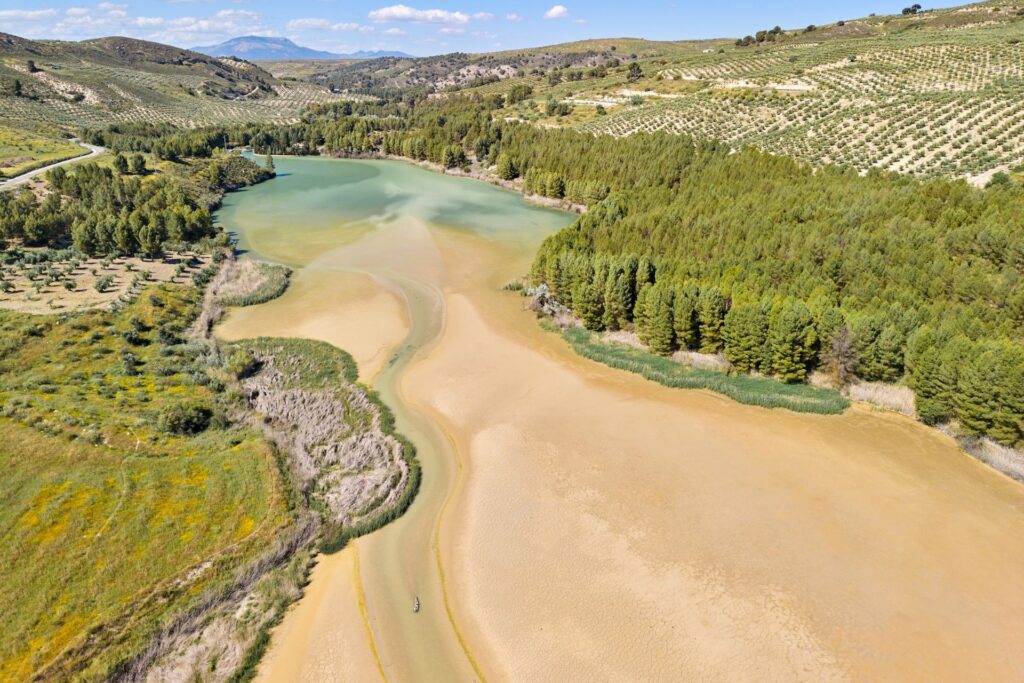
The architectural heritage of Cacín includes the Church of Nuestra Señora de los Dolores, composed of a single nave with columns on its sides, highlighting the silver chalice of more than two centuries old, and the popular ‘Roman Bridge’, which actually dates from 190. The Cacín Counter-Reservoir, built in 1965, regulates the flows and feeds the canal that irrigates the entire region. The Poblado del Embalse, built in the 1960s next to the dam, is a unique example of functional architecture integrated into the landscape. This nucleus houses the La Resinera Information Center and has become a base of operations for active tourism in the region. During the summer, it becomes one of the most requested destinations for children’s and youth camps, while its crystalline waters invite swimming, fishing, and water sports.
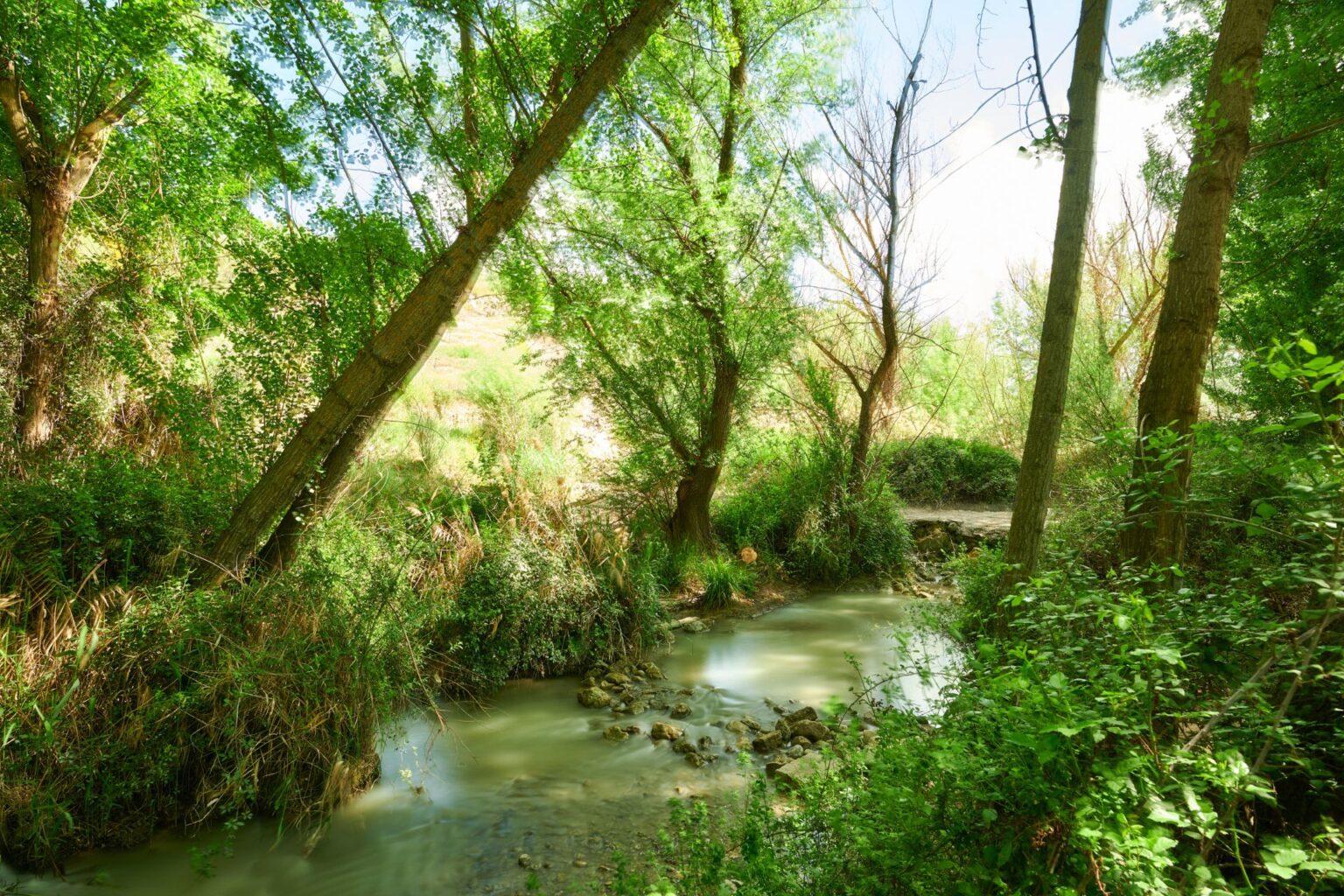
The Cacín River, second in category of the Poniente de Granada and tributary of the Genil, provides excellent salmonid fish such as the fario trout and the almost extinct native river crab. Its banks are home to unique ecosystems where mimbrera, black poplar, reed and eucalyptus grow, a refuge for ducks, moorhens, blackbirds and nightingales.
The festive life of Cacín revolves around centuries-old traditions that celebrate rural identity. On January 20th, the ‘Día de las Merendicas’is celebrated, a pilgrimage where the neighbors enjoy the countryside with their families and eating migas, rice dishes and homemade sausages; and in August the patron saint festivities in honor of the Virgen de los Dolores include sports competitions, cucañas and the traditional great paella for all the neighbors and visitors. The night before February 2nd, the celebration of La Candelaria takes place, with bonfires formed by old furniture, keeping alive the ancestral tradition of the ‘mancheo’: young people who create spectacular circles of fire spinning handmade torches over the embers, drawing luminous strokes that can last up to fifteen minutes in a dance of light that keeps alive a millenary tradition.
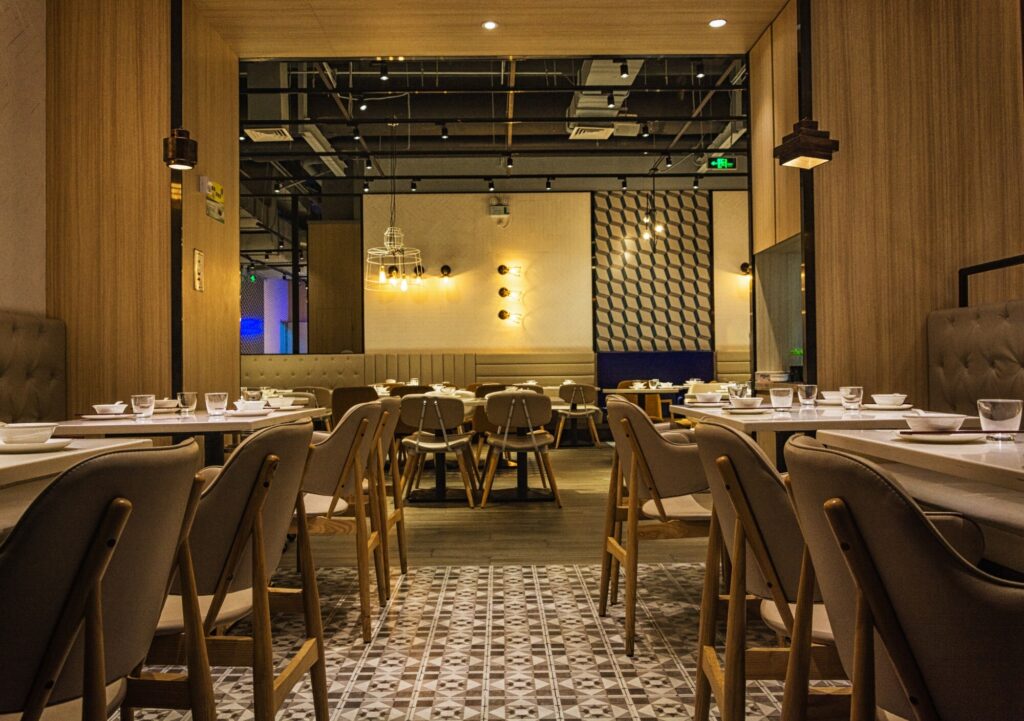
Baked trout, stew, stewed partridges, remojón and collejas omelet make up a gastronomic menu where each dish tells the story of a town that has been able to extract the flavor of its land and its waters. Cacín demonstrates that the most authentic territories are those where history is lived, savored and shared.