


WATER, HISTORY, AND REBIRTH
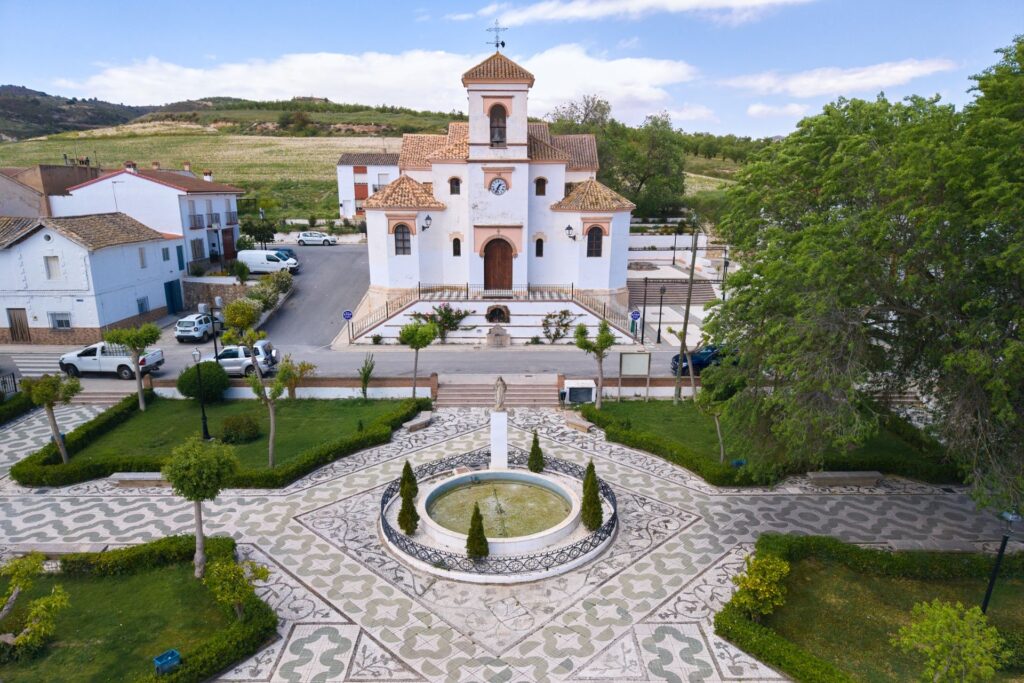
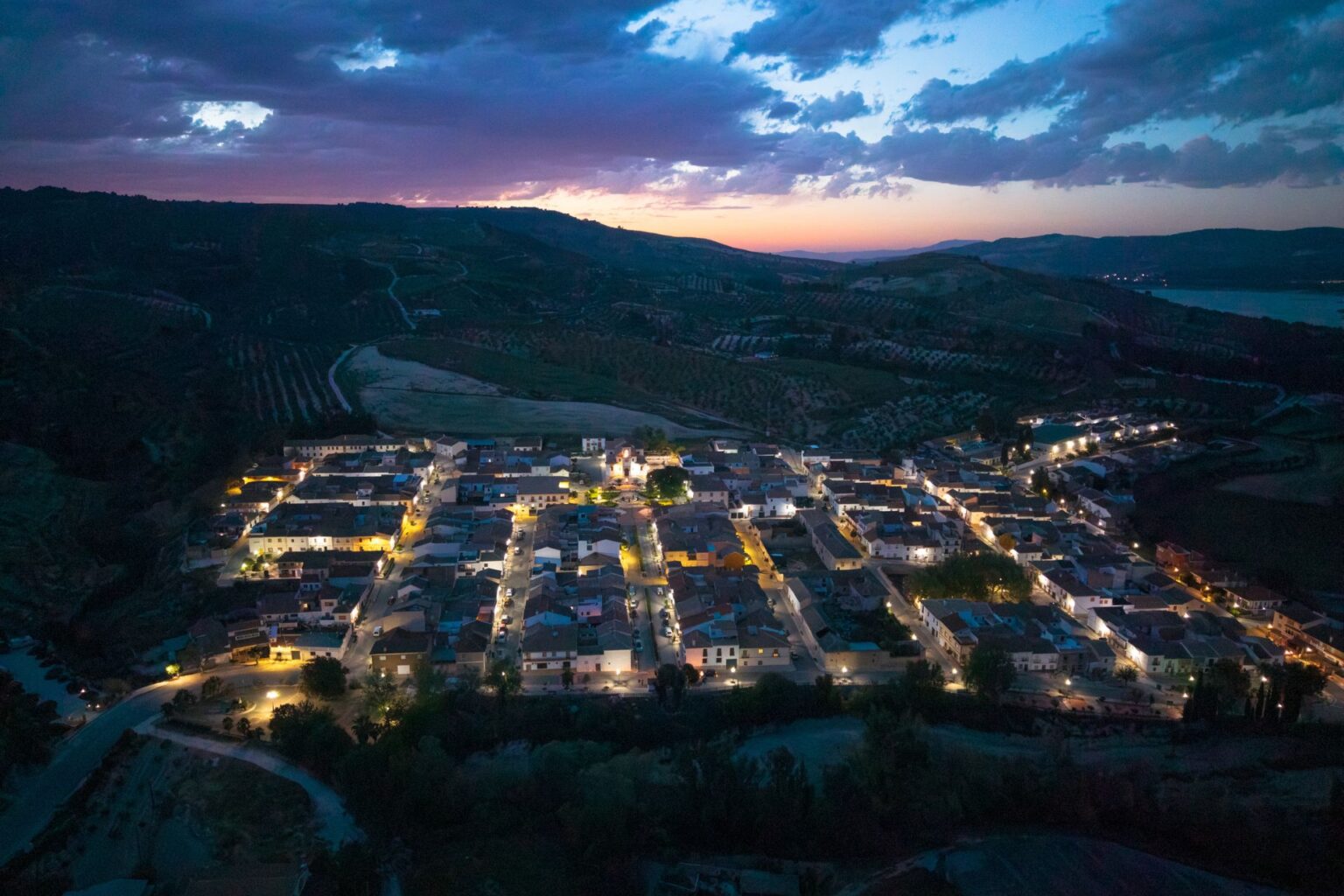
The fate of Arenas del Rey was forever sealed on a fateful Christmas Eve in 1884. The earthquake of December 25 completely destroyed the town, causing 135 deaths and 253 injuries, turning that tragedy into the origin of an exceptional story of rebirth. Rebuilt thanks to contributions received from all over Spain, the current town emerges as a testament to the human capacity to rise from the rubble. Its straight streets and wide squares dedicated to Alfonso XII and the journalist Luis Seco de Lucena show that this is a town forged in national solidarity in the face of adversity.
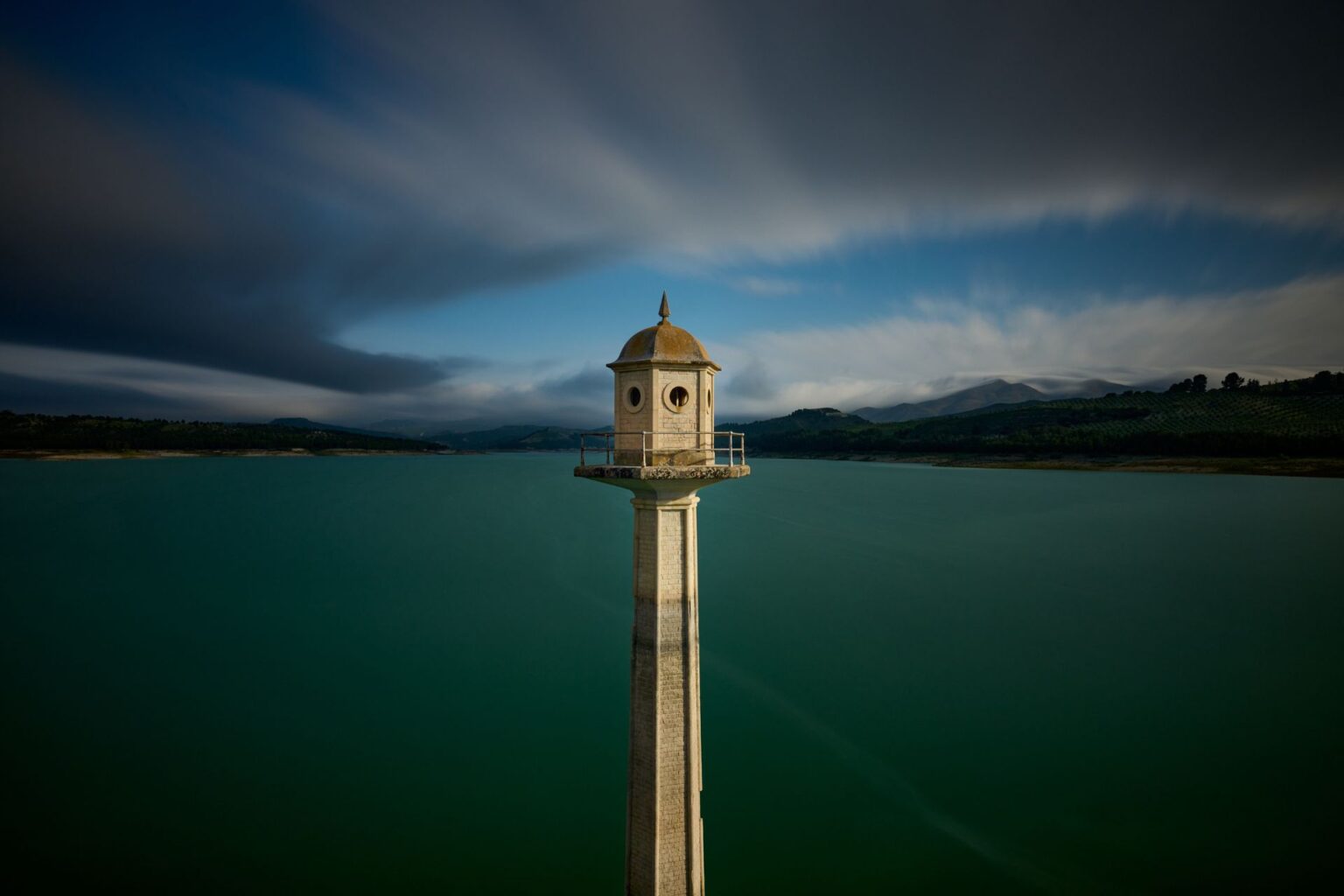
Built on a slope of the land, at the foot of the mountain and on the banks of the Bermejales reservoir, Arenas del Rey finds its backbone in water. The reservoir, which began operating in 1958, transcends its hydraulic function to become the recreational heart of the territory. In the Cacín River gorge, one of the most spectacular landscape formations in the west of Granada, nature has built unique shapes and landscapes over millennia that display all their grandeur between the turquoise blue waters of the reservoir and the imposing mass of Sierra Tejeda.
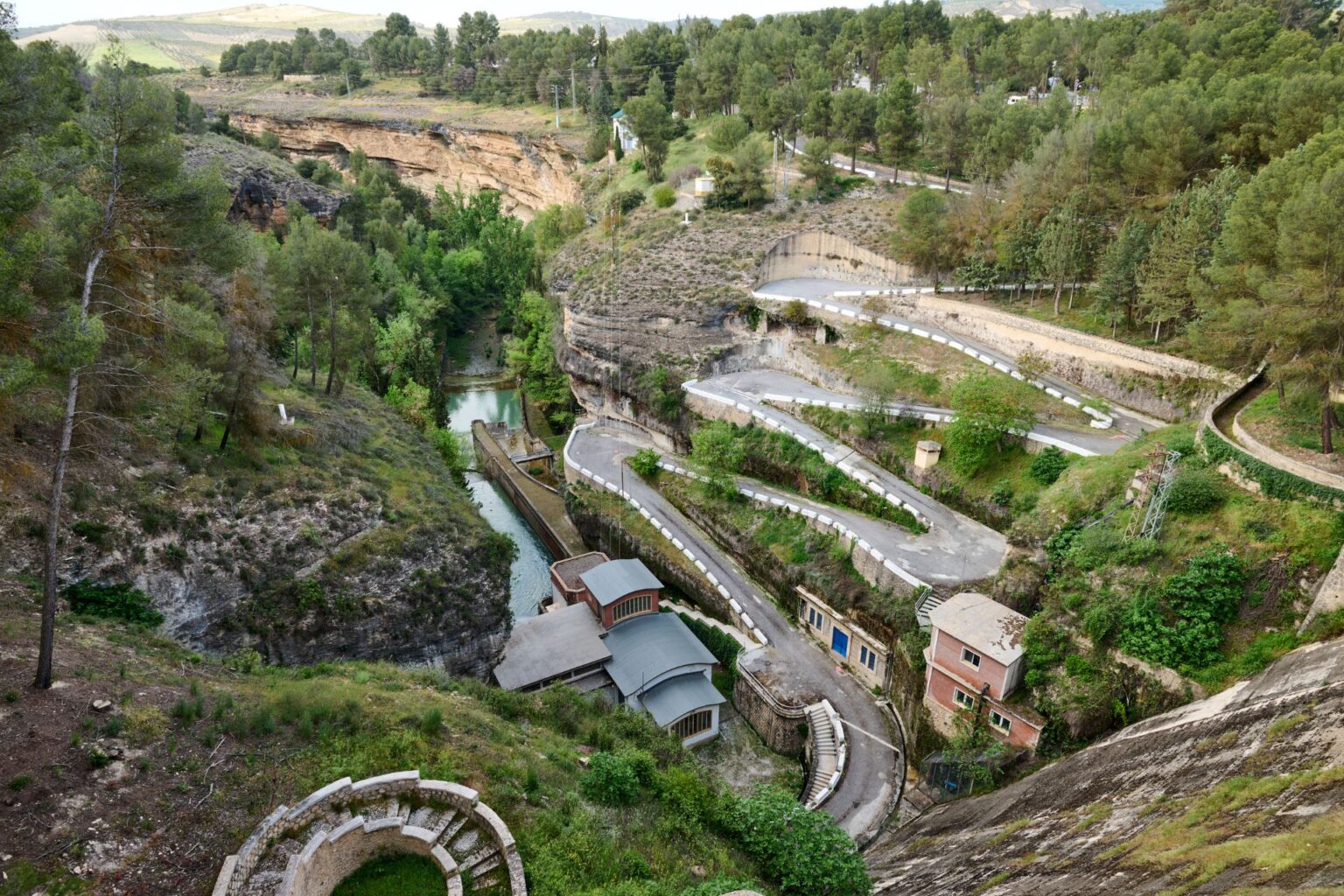
The Poblado del Embalse, built in the 1960s next to the dam, is a unique example of functional architecture integrated into the landscape. This nucleus houses the La Resinera Information Center and has become a base of operations for active tourism in the region. During the summer, it becomes one of the most requested destinations for children’s and youth camps, while its crystalline waters invite swimming, fishing, and water sports.
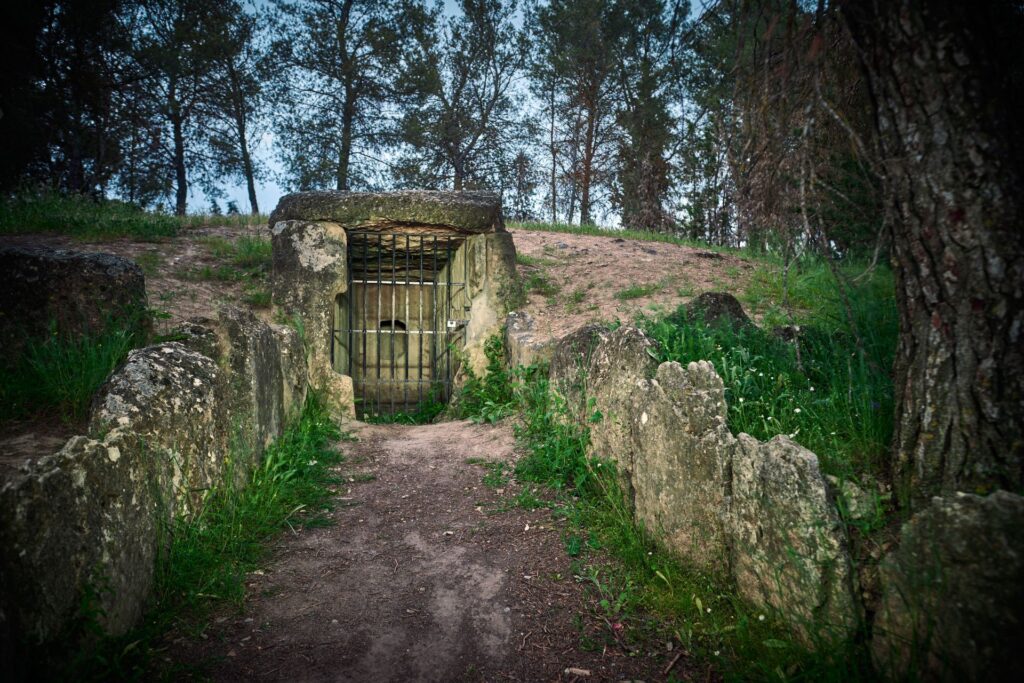
The heritage of Arenas del Rey, completely rebuilt after the catastrophe, includes the Church of San Sebastián, a late 19th-century basilica-plan temple, and the Ermita de San Isidro surrounded by lush gardens. The Megalithic dolmen next to the reservoir, moved and rebuilt stone by stone to prevent it from being submerged in the waters of the reservoir, connects the present with ancient civilizations. The hiking trails that descend along the Cacín River to the bridge and the spectacular views from the dam viewpoint complete an offer where nature and history coexist in perfect harmony.
The festive life keeps alive traditions that reinforce the community identity forged after the tragedy. On January 20, the San Sebastián festivities are celebrated, on February 2 the festivity of La Candelaria with community bonfires between neighborhoods, on May 15 the romería de San Isidro, and from August 8 to 11 the Patron Saint Festivities that culminate with the procession of San Sebastián and the Virgen de los Dolores. The Bermejales Reservoir also celebrates its own festivities in honor of the Virgen del Carmen, turning the water into a stage for celebration and devotion. In Arenas del Rey, each festivity is a reminder that the true strength of a town is born from its ability to transform tragedy into community.